My family is a good example of the most commonly mixed population that once
inhabitated the vast
domains of the Habsburg Monarchy. The maiden name of my father's mother was
Eugenie Egele.
Born in Mulhouse, Alsace, by the time my grandparents met she was the young
widow Sauvageot
and owned a "Gasthaus" after her first husband. He had died in North Africa,
during some French
colonial war, if I am correct, about ten years after the birth of their only
child, my aunt Germaine.
When grandfather, a waltzing weaver who had walked and worked his way without
any specific goal,
entered the Inn, it was love at first sight. At the time, it would have been
highly inappropriate if they
had openly lived in sin. He settled in a near-by village, as I have learnt
from a newly discovered
lovely postcard my grandmother wrote grandfather after one of their frequent
secret rendez-vous.
When grandmother found herself pregnant she sold the place, and they all moved
to Vienna.
There, in early 1910 my grandparents finally got married. My father was already
four months old.
Twelve years senior to her young husband, grandmother probabely doubted the
waltzing weaver's
intentions, but their relationship grew and they lived together in harmony
until her death parted them.
Grandfather's parents stemmed from a Bohemian region (thus my name), that
at the time was part of,
but today is found near the Austrian border. He inherited the family's so
called Maria Theresia Patent,
a permission to trade within the Monarchy. Such privileges were granted to
subjects that had served
the Crown well. As a child I liked to imagine one Jedliczka had been an adventurous
dare-devil,
spying on the Turks, the same way my brother and I dreamed of being Indians.
How silly that was
I found out in my late teens in Vienna, when I made friends with a group of
turkish students and
experienced their kindness. Curiousely visiting Turkey, I was received with
generous hospitality.
***
My mother's father, named Ignaz Issel, was born in Galizia, now Romania.
His ancestors were Donauschwaben, most likely out-sourced in the 17th century
by
empress Maria Theresia or her son Joseph II in their efforts to colonise the
land and feed
a growing population. Armies of craftsmen and farmers were settled along the
river Danube.
He got drafted, and during World War I, he drove locomotive engines in the
Habsburg army.
Since they all were German-speaking, both my father's and mother's parents
in 1918 opted
for Austrian citizenship and settled in Vienna.
Good ol' Ignaz fathered twelve children with my mother's mother, her maiden
name Provasnik.
The poor woman died age 38, shortly after having won enough in the state lottery
to allow
the widower to look for a new mother for his many children. He married Franziska
and fathered
some more with her. After the war, Ignaz continued driving trans-Europe steam-trains.
When he died in his early 60's in 1938, he left Franziska with a nice pension..
Issel-Grossmutter, as we called her, was a true angel and loved by all.
She enjoyed her inherited free rides on the Bundesbahn to the biblical age
of 96.
***
The first child of my parents, a girl, shortly after birth became victim of
pneumonia.
My sister Hermine was born in 1929. Her dream was to design haute couture.
And so, during the war she attended the Modeschule Hetzendorf in Vienna.
After the war some Americans arranged summer camps for talented survivors
at
Schloss Leopoldskron in Salzburg. There an innocent girl met an experienced
artist,
fell madly in love with the painter and thought that they would stay together
forever.
Not many paintings were sold, and so, when their daughter was born Hermine
stopped dreaming of an own career, went to work to support husband and child.
My niece attended one of the best schools in town, and after many a bad times
her father was able to get his career moving, one that finally placed him
in the sun.
Soon husband and daughter felt Hermine was not up to their life-style any
more.
Left behind, my sister took a few classes and graduated to Magistra,
spending her remaining active years restoring ancient drawings at the Albertina.
The poor thing developed dementia and, although under the final loving care
of her daughter, during her last years could not leave home before she was
taken
to the Rudolfiner Krankenhaus, where she passed away on October 30, 2021.
Buried November 18, may she rest in peace at the Grinzinger Friedhof.
***
My dear brother Martin, born 1937, after an extremely dramatic life, strangely
enough
together with his second wife, died on March 21, 2013 - both by heart attack.
I was born youngest of four, late in 1939, at exactly 01:30 in the morning.
My birth-certificate (Eintragung einer Geburt) of course carries a swastika.
"You were a present to the Führer, never forget that", said
the soldier and very early
follower of the lunatic so many hoped would lead Germany to "a place
in the sun".
His mother, born in Alsace, aired a more sound and at the time dangerous view.
She knew Hitler meant war and used to say "too many hunters for one rabbit".
She and grandfather also prevented me from being christened "Adolf".
Luckily, my father settled for Hermann as my second name.
***
In Summer 1944, we were evacuated from Vienna to a farm near Mauthausen, one
of
these horrible concentration camps. The Nazis must have considered their death
factories
and the areas surrounding them to be quite safe. They were no prime target
for Allied bombs.
One night we were woken up by a gang of Soldiers and volunteers looking for
inmates who
had escaped that night. Searching the barn, they pierced the hey with bajonettes
and forks.
Even to me as a child it was obvious that something terrible was going on
at the KZ nearby.
When the party had left, I remember the grown-ups putting their heads together,
whispering.
Had any of the escaped prisoners been found on the farm all of us would have
been in danger
of collectively being accused and found guilty of sheltering fugitives - next
stop the camp.
In January 2008 it so happened that I saw the movie "Die Hasenjagd"
on German televison
and found out that our horrible experience was part of a well-documented Nazi
crime.
***
Autumn 1944, back in Vienna, together with my mother in a huge crowd of spectators
lining the Linzer Strasse, half-way from were we lived, near Schloss Schönbrunn,
I remember
watching endless columns of Russian war prisoners, dressed in uniforms of
the same sort of
green-yellowish-grey colour as the dried peas we were to receive in aid from
the victorious
Red Army just six months later. Guarded by Wehrmacht soldiers, they marched
westwards,
creating an unforgettable clap-clap sound with their thousands of feet in
tune.
From lines behind, were they could not be discovered, people threw loafs of
bread towards
the prisoners who tried to catch them, despite the guards shouting warnings.
Like in a football
stadium, cheers of excitement and roars of dismay rose from the watching crowd
while some
loafs were caught and others lost by the prisoners. This turned out to be
the last day-time
column that left Vienna. From then on, mother told me, prisoners were marched
during nights.
Obviousely, the omnipresent Gestapo had reported this incident of compassion
for Russians !
***
I was not aware of the horrors of war. Around five years old, I did not fear
the air-attacks,
rather tried to watch them. My mother once pulled me away from a window that
minutes
later was blown to pieces by air-pressure, turning the face of an elderly
woman who had not
withdrawn in time into a bloody mess. "There you are", my mother said, slapping
my face,
releasing her tension and anger about my carelessness. By the way, I knew
I deserved it !
***
During the war, my father served as a truck-driver, carrying ammunitions to
the eastern front.
By Spring 1945 that front was very close to Vienna. One day before the German
troops withdrew
westwards, seeking, in vain, to become American prisoners, my father was stationed
near the Prater.
There was no bomb shelter in our house, all tenants waited in the basement
for the bombing to end.
We were lucky, and at night father visited us and brought along enough beef-soup
to feed all present.
Next day, all quiet, looking out the window we watched the corpses of the
killed being removed.
One day of looting followed. Everybody was carrying something. Finally the
first russians arrived.
These soldiers behaved very disciplined and, rather unbelievable, distributed
bread and peas.
People tried to turn their banners as to the obvious. Nazi books, documents,
uniforms and insignia
were burnt in the open. I was forced to hand over the leather-belt my father
just had given to me
as a token of memory, decorated with an impressive brass swastika as it was.
"Can you imagine
what the Russians will do to us if they find it ?" - So, I cryingly handed
it over to my mother.
The first wave of Russians, despite being friendly most of the time, unfortunately
drank a lot.
Just in case, my sister went into hiding at my grandmother's and, thus, survived
unharmed.
Instead, we were harshly treated by communist-turned ex-nazis who searched
for my father,
to hang him out of pure enthusiasm. When they did not find him they threw
us out of the house.
All buildings were decorated with plenty of red banners. I specially remember
the traces of the
swastikas, sawn on 1938 and torn off 1945, their contures still visible on
the ragged cloth.
***
I have already mentioned that we got thrown out of our apartement shortly
after the war .
Self-appointed civil servants claimed we had occupied it injustly. The fact
was, my parents
had not taken it from anybody. The authorities had allocated it to them, like
in many other cases,
after Jewish tenants had succeeded in leaving the country in time or had been
deported
to concentration camps. This was established many years later. At the time,
we could have been
in a real mess, but life writes the best stories ! - In March 1945, my mother
was stopped during
a walk by a woman sitting in a taxi, on her way to a hospital, a three years
old girl on her knees.
This woman begged mother to take care of her child while she was to undergo
surgery. They only
knew each other vaguely but mother did not hesitate, said yes, and brought
home a little sister.
Next we knew, the unfortunate woman died in hospital, and the girl was put
in mother's custody.
A month later, when we all were to be on the street, we found out that the
woman's flat had not
been bombed and that her daughter, Rosie was her name, had the right to it.
Since my mother
was responsible for her, Rosie had to put us up ... She came to live with
us until around 1950,
when she was adopted by another family.
***
After the war, mother fed us as best she could. To the last piece of
garment, fur and jewelery
she traded with peasants for eatables. We went along, trying to find
vegetables near the road,
pulling a small carriage. The only bridge across the Danube river then
was the wooden one
Russian soldiers had built. It was very narrow and only guarded on
one side. Traffic went on
in both directions, a careless moment and one could fall off and drown.
I remember one
occasion, my brother and me unpatiently waiting, staring at three big
pianos, a dozen or so
of pendulum-clocks, numerous pieces of furniture, paintings, carpets,
vases etc., while mother
negotiated for food with a fat man in boots, pointing at us, explaining
how hungry we were.
Even today, I still wish this miserable farmer is burning in hell for
his greed.
***
My brother was a real genius. One day he came home with a suitcase
full of cigarettes
he had picked up during a raid on a black market, while every grown-up
tried to escape.
Cigarettes were the best currency during these times. Smoke pulled
us through for a while.
Many houses bombed, there was a desperate shortage of rooms to rent,
not to speak of flats.
We went to live in just one of our two rooms and let the empty one
to a young woman
who turned out to work as kitchen-maid for the owners of a bakery.
Her name was Mitzi.
She was a big girl - and she did not wear panties, as we boys soon
discovered. I could not
explain the strong heat that suddenly streamed through all of my body
when I first saw "it" !
***
Grandfather, who already had served Franz Josef during the First War
and been wounded then,
was drafted to air-reconnaissance, wounded again slightly, and lucky
to fall into British hands.
While in camp, under the eyes of the guards, he managed to send grandmother
some tins of
sweetened meat, which shows that the English had a rather gentle approach
towards
the mostly senior citizens they had captured during the last days of the war.
After an early release he was able to already spend Christmas 1945 at home.
***
Grandmother, during the whole war had stoically refused to enter any
shelters, waiting out
all attacks in her basic floor apartement. When a bomb blew away the
top of the house she
survided. Playing cards with a neighbouring woman, they watched the debris
tumbling down.
Thanks to her taking care of our sister, we all made it through the
worst period of starvation.
***
My mother's stepmother did not behave like one at all. From combing
the lice off our heads
to feeding us whatever there was available she took care of not only
her own grand-children,
but often of my brother and me as well. The picture of our bunch sitting
around a pot of
soup made of halv-rotten peas, eating like mad, larvae or not, will
stay forever in my memory.
***
So, what did the kid and his brother do, no toys around, ruins everywhere,
hungry all the time.
To tell the truth, we spent some of the greatest times during 1945-46
in this hardly law-abiding
period of our lifes. There were numerous caves and bunkers to explore,
ammunition to be found,
huge anti-air guns still left in many public squares, ready to be climbed
on and maneuvred.
On one occasion I got hold of a pistol. Heavy as it was, I carried
it with both hands. Walking
on a sunny afternoon in the middle of the road, I went
right into the arms of a Russian soldier.
The "Mushik" shook his head in surprise and, lucky me, smiled at me.
Boy, was I glad he took it.
The bloody gun was too heavy for me. I was already sorry for picking
it up in the first place !
***
Some words in Russian we knew were Chleba and Spassiba, some
of our first words in English
were Chewing-Gum and Please. If we had been older or girls,
we should of course have known
Nylons and Condoms. The districts of past-war Vienna were each
ruled by one of the victorious
country's military commands, except the First District, which was run by the
four armies together.
Their combined military police force was called "The Four In The Jeep".
Depending on where one lived, peas from the Ivans, sweet canned meat from
the Tommies,
corned beef from the Yanks or salted fish from the Frenchies dominated the
local black market.
The fact that we did'nt pick up any French did not prevent us from attending
the French
Christmas party in 1945. We could not afford to miss that. Leaving early,
we managed to collect
fruits and chocolates at the American, the British and the Russian parties
as well - all in one
evening. The total opportunism in our early struggle to survive still amazes
me.
***
I started my first job before I entered school. My brother and I collected
horse-shit. There was
a great demand for it.We sold it to gardeners. Miniature gardens had
popped up in every spot
that could be cultivated. In addition, we collected empty tins, preferabely
near garrisons.
Those we sold to the many self-made craftsmen who turned them into
everything from plates
and cups to small ovens and the like.
***
In Spring 1946, I must have resembled a silent butler, because the Red Cross
sent me abroad
for three months to Switzerland and placed me in Zürich with Hans and
Grete Häusler,
a most dear childless couple. They put back some flesh to the bones of this
hungry war child.
Hans passed away some ten years before Grete, who enjoyed fair health at a
home for elderly
until she peacefully left this world in October 2006 at the biblical age of
101 years.
Rest in peace - and thank you for the six decades of our wonderful friendship
!
***
During my first winter in school, my brother and I had to share one pair of
shoes.
Each of us stayed at home every second day, hungry waiting for the other to
return
with a desperately needed school-lunch, provided by Red Cross and Schwedenhilfe.
Strangely enough, I remember disliking the bitter taste of a chocolate drink.
***
When father knocked on our door in 1948 - unharmed apart from a shot through
a leg and
in much better condition than the lot of us, starving as we were - I asked
"Who are you ?"
In his youth he had studied music. His obvious talent had helped him survive
three years
in Russian prison camps - leading orchestras !
I must have looked like a tooth-pick because shortly after the Red Cross again
sent me
abroad for three months, to Amsterdam, where a "Tant Riet" fed me "boterhammetjes"
and a Dutch teacher almost fell in tears when he first looked at my handwriting.
Sorry to say,
I have lost all contact with these kind people in Holland, and my graffitos
have not improved,
but I shall never forget the love and care I met in Amsterdam.
***
This lively child passed basic-school without doing many lessons and
was ill-prepared for a
working-class life. There was no money to put me in high-school nore
did my parents have
the right connections to get me a scholarship. Like often in similar
cases, while in rural areas
priesthood was a solution for talented catholic off-springs without
means, in Vienna, being
a protestant on top of it all, my teachers recommended a career as
a typographer, and that's
what I became. From the very beginning of my apprenticeship, outspoken
as I was, my
juvenile tendencies of questioning each and everything combined with
an underlaying strive
for fair play, without much respect for authority without competence,
got me into conflict
with my superiors. It may be hard to understand now, but in the mid-fifties
of the past
century, during working hours, private conversations were prohibited
for grown-up
professionals and trainees alike. A bastard, called "Faktor", not only
handed out our daily
assignments but also supervised us, shouting "Silence" whenever he
felt necessary !
***
Austria already then worked on it's world record in "Proporz",
that is political power-sharing.
The power-sharing parties were then and have been until Mr. Haider's
rather recent coup d'etat,
except for some relatively short periods of interregnum, the honourable Social
Democrats and the
dito Christian Socialists, also called "Volkspartei". People called
them the Reds and the Blacks,
refering to the red banners of the one and the black clerical frocks
of the other.
One of these two main political parties usually occupied the presidency,
the other one the chancellery. All executive positions, from the members
of government down to
the higher middle-management of society-controlled institutions, were
filled by party members,
with an executive of one of the two parties and, in balance, a vice-executive
of the other party.
This system of watch-dogs created an enormous and expensive surplus
pay-roll.
What's more, the proportional two-party system affected the whole society.
Whether one wanted
to rent a community apartement or needed a license, whether one seeked
a position above level,
nothing could be achieved easily without first becoming a member of
one of the two parties.
Various reasons for these endless coalition governments can be found:
during the years before
Adolf the terrible swallowed Austria, these parties had fought
each other mercilessly and thus had
made it very easy for the Nazis to take over the conflict-ridden country.
Many senior party leaders
had spent years together in Hitler's concentration camps and promised
each other not to repeat
their past errors, should they ever get out alive. Thus, although they
were the off-springs of the
pre-war Austro-Marxists and Austro-Fascists, both parties now shared
a profound inclination
towards non-violence and non-confrontation.What's more, both developed
quite equally strong.
Together, for many years they held a comfortable two-third majority
in Parliament.
***
In the autumn of 1958, after four years of hard labour at the camp
they called a printing shop,
I flew out into freedom. Did not know what to do with it, really, started
taking a driving license,
drove through the Burgenland, east of Vienna, from farm to farm, trying
to sell machinery and
household gear to friendly peasants. They did not buy much but always
fed me well and offered
their home-brew. In the evenings I stayed in small bed-and-breakfast
places, climbed huge beds
equipped with giant pillows, read some lines "Krieg und Frieden" and
usually fell asleep swiftly.
This country-side adventure could not go on forever ! - After having
deformed the company
car somewhat, my boss and I agreed it was time for me to move on.
***
In July 1959, I went to work in Switzerland. After some strange events, my
first employer
let me to some of his colleagues for rent, I ended up at the daily paper Winterthurer
Tagblatt, and there, for the first time I really enjoyed my profession.
In April 1960, however, I came in conflict with the native typographers.
They grudgingly felt that I was snatching some of the more interesting duties
from them.
There was this journalist-poet, Erni was his name, who like me had ancestors
in the Alsace.
He liked my work so much he let me, not them, design the lay-outs of his weekly
Arts & Literature supplements.
***
Back in Vienna, October 1961, I found a morning job as a proof-reader
with the "Express",
then located at the Pressehaus in the heart of Vienna, next to a Gasthaus
with vaults dating
back some 400 years. Finally, I thought I was able to complete my basic
education and
started night-school at the "Arbeiter-Mittelschule". After one year,
just after I had graduated
in Geography, I found out that this was the only one subject I was
to accomplish. Others,
like Latin and Mathematics would remain unfinished business. A local
trade union boss,
in a bad example of the good idea of workers' influence on floor-decisions,
needed
my position badly for one of his good friends - and had me moved to
the night-shift.
I also had private reasons, but I think this did it. Together with
the job I quit school,
rather furiousely packed just one suitcase and took the next train
to Stockholm.
***
Why Sweden ? - I guess that was Kurt Tucholsky's fault. I just had
read his novel
"Schloss Gripsholm".
***
First time in Stockholm, I stayed from Autumn 1962 to Spring 1963.
The money was good.
I worked at a legendary printshop in the Old Town, setting headlines
to and putting together
official government documentations, picking up some basics of the language
at the same time.
I'll never forget the first time the news in swedish on the radio made
some sense to me. Another
milestone was understanding what Anita Lindblom sang in her fantastic
dark voice: Such Is life !
Little did I know that the friendly middle-aged gentleman who patiently
helped me getting started
was the famous alleged communist spy Fritiof Enbom. It was only many years
later when I
found out that he had been condemned, unjustly, as many people claimed,
and later forgiven.
At the time, nobody mentioned anything. He lived to enjoy a modern
flat in one of the most
fashionable new buildings created near Valhallavägen, assigned
to him by the most likely
regretful authorities. Whatever the truth of his past, I owe this man,
rest in peace,
and all the other helpful followers of Gutenberg at Statlanders Tryckeri
a lot.
***
Early in May 1963, I returned to Vienna to try a second start there.
My professional
experience had qualified me for a year of Master Classes at the Graphic
Institute.
Near graduation in mid 1964, a teacher told me that, unlike the other
students, I could not
expect any help to find employment within production management at
a newspaper,
which was what I was looking for, unless I joined any of the ruling
political parties.
He suggested to look for a job outside the sensitive media sector.
***
Autumn 1964, once more I felt I needed to move and clear my mind somewhere
else.
Strangeley enough, Australia to me looked the place to be - but I was
not allowed in.
The reason, ironically, was my mother's membership with the Social
Democratic Party,
as a secretary at the embassy rather informally explained to me.
Those were the days of Cold War. The Australian Conservatives kept
their country "clean".
Quite in shock, I contemplated returning to Switzerland. Comparing
my rather complex
Swiss experience with the good days I had encountered in Sweden, I
finally chose
to return to Stockholm. While waiting for the proper working permit,
for two weeks I cleaned the dishes at a restaurant called Rådhuskällaren
and after that again picked up the good old trade at Dagens Nyheter.
***
Come Spring 1967, I went to Gothenburg and joined the crew of a Swedish-American
liner,
the legendary Gripsholm. I regard that summer as one of the happiest
seasons of my life,
sailing the Seas, despite cleaning staff-cabins at first. Thanks to
my big mouth, soon I was
promoted to the glorious position of a Bell Boy and dressed in uniform.
As I went up and down
the elevators, the ship went east- or westbound Gothenburg-New York
and cruised Canada,
Bermuda, Bahamas, Leningrad, North Cape, Senegal, Sri Lanka. Excellent
food,
good money and plenty of time ashore. Was New York to be my next home
?
Could have, had I not filed that application before setting out ...
***
By autumn1967, I was called to take a test at Stockholm City's School
Of Commerce.
Not having graduated from any college ever, I was admitted to a year
of post-graduate
commercial classes. Genuine interest in swedish, my english and german
plus my dive
into basic mathematics during the months at sea paid off handsomly.
One year later, nice graduation in my pocket, I went to Kungstornet
at Kungsgatan,
took the elevator up to Lindebergs Revising Accountancy Office and
simply asked
if they'd let me practise without pay. A month later they asked me
to stay.
For one year I enjoyed digging for the mysteries hidden behind figures,
to be found
if one cares to take a closer look. What's more, there I made the acquaintance
of some
most helpful outstanding professionals and warm human beings. The omnipresence
of
kind people, their guidance, support and friendship made life easy
for me.
Some of them are still close friends. Thanks to one of them sending
clients, from 1969 on,
I was able to work in my own book-keeping office. Sometimes I think
I should have followed
that path. Instead, from 1972 on, one would find me in my record store
in the so-called
Carnaby District of Stockholm. The devil may have ridden me. If he
did, he diguised well.
I enjoyed every minute of my ride through the roaring seventies.
***
When asked why I haven't applied for Swedish citizenship, the answer is: I
should like to.
After half a century in the country, it should not surprise anybody if I did.
However, as long as double citizenships remain impossible and a European one
is not available, losing my Austrian citizenship should make me feel like
cutting off a leg.
To me, Austria is much more than what was left of it after 1918. No doubt,
I am very much for
a unified Europe, and I believe that the best outcome of the developement
towards it would be
a union of nations with political institutions similar to those envisioned
by the Habsburg dynasty.
I am well aware that Austria-Hungary was regarded a rotten corpse when it
was torn to pieces.
But one only has to read what is available from those days and to look at
what happened thereafter
to understand that the Monarchy provided for its multi-cultural conglomerate
of nations to prosper
together in peace. Today, we are witnessing yet another historic attempt to
reach this goal, not by
any dynasty, but by the nations, out of their own free will, including the
enemies of both wars and
countries like Sweden, who would strongly have denied any such aspirations
just 30 years ago.
Waltzing weavers like my grandfather are, after almost a hundred years, again
able to cross
borders of an even wider Europe without visas, work here and there without
special permits
and settle down wherever they please among their brethren - citizens of Europe.
***
To be continued.
***
Photo taken February 2001
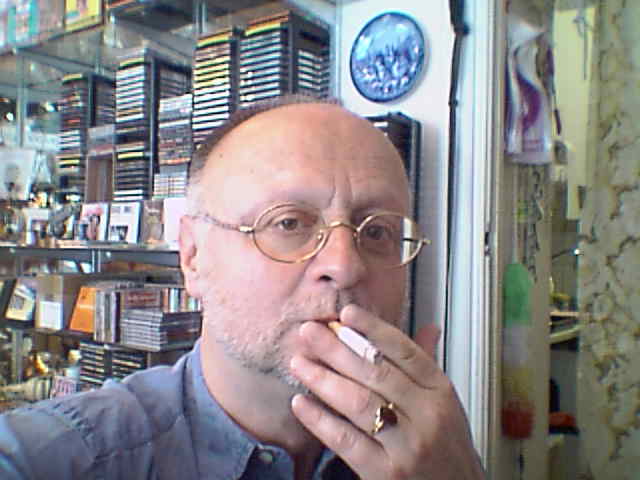
Wolfgang Jedliczka * Sundbyberg * Sweden


